

Sleep Quality: Why It Matters for Your Health, Hormones, and Blood Sugar
In today’s fast-paced, performance-driven society, sleep is often pushed aside. Yet sleep quality plays a fundamental role in energy levels, concentration, mood, and overall health. It is also one of the most effective ways to improve sleep naturally and support long-term well-being.
A significant proportion of adults experience sleep disturbances, and average sleep duration has steadily declined across developed countries.
Long considered a luxury or a loss of time, sleep is in fact a core biological need. When sleep is insufficient or disrupted, cognitive function declines, fatigue accumulates, and both physical and emotional balance are affected.
The Benefits of High-Quality Sleep for Your Health
High-quality sleep supports the body at every level, including hormonal balance and blood sugar regulation.
What Defines High-Quality Sleep?
According to sleep research and recommendations from the National Institutes of Health (NIH), quality sleep is based on several measurable criteria:
- 7 to 9 hours of sleep per night
- Falling asleep within approximately 30 minutes
- Few and brief nighttime awakenings
- Continuous sleep with well-structured sleep cycles
- Consistent bedtimes and wake-up times
When these conditions are met, quality sleep contributes to:
- improved emotional and hormonal balance
- healthier skin
- a stronger immune system
- reduced inflammation and physical discomfort
- better cardiovascular and brain health
- improved memory and reduced risk of cognitive decline
- better weight regulation
Adequate sleep also enhances productivity, decision-making, mental clarity, and resilience to daily stress
Sleep, Nutrition, and Blood Sugar: A Critical Connection
Sleep and nutrition are closely interconnected, and their relationship works both ways.
Poor sleep disrupts blood sugar regulation as well as appetite-related hormones, which naturally increases cravings for sugary and highly processed foods (such as sweets, snacks, and refined carbohydrates). This response is physiological — not a lack of discipline.
Conversely, balanced nutrition, regular meal timing, stable blood sugar levels, and effective stress management help regulate hormonal activity and support deeper, more restorative sleep. In short, nutrition and sleep function in synergy, each reinforcing the other.
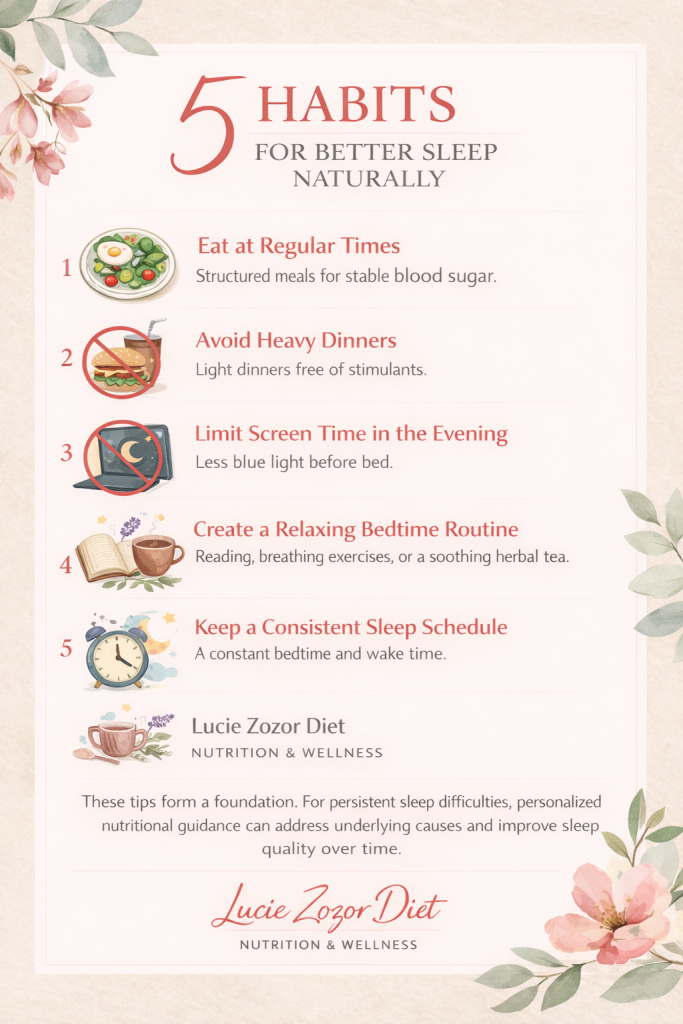
Two Simple Ways to Improve Sleep Naturally
- Treat sleep as a priority, just like an important appointment
- Shift your perspective: view sleep as a time for recovery and restoration, not as a constraint
Creating a calm and intentional bedtime routine can significantly improve sleep quality over time.
A Personalized Approach to Better Sleep
Improving sleep is not only about willpower or routines. Persistent sleep difficulties are often linked to underlying imbalances such as inadequate nutrition, unstable blood sugar, chronic stress, or an irregular lifestyle rhythm.
A personalized, nutrition-focused approach can help identify these hidden barriers and provide practical, sustainable strategies to improve sleep naturally.
👉Because better sleep means better health.